


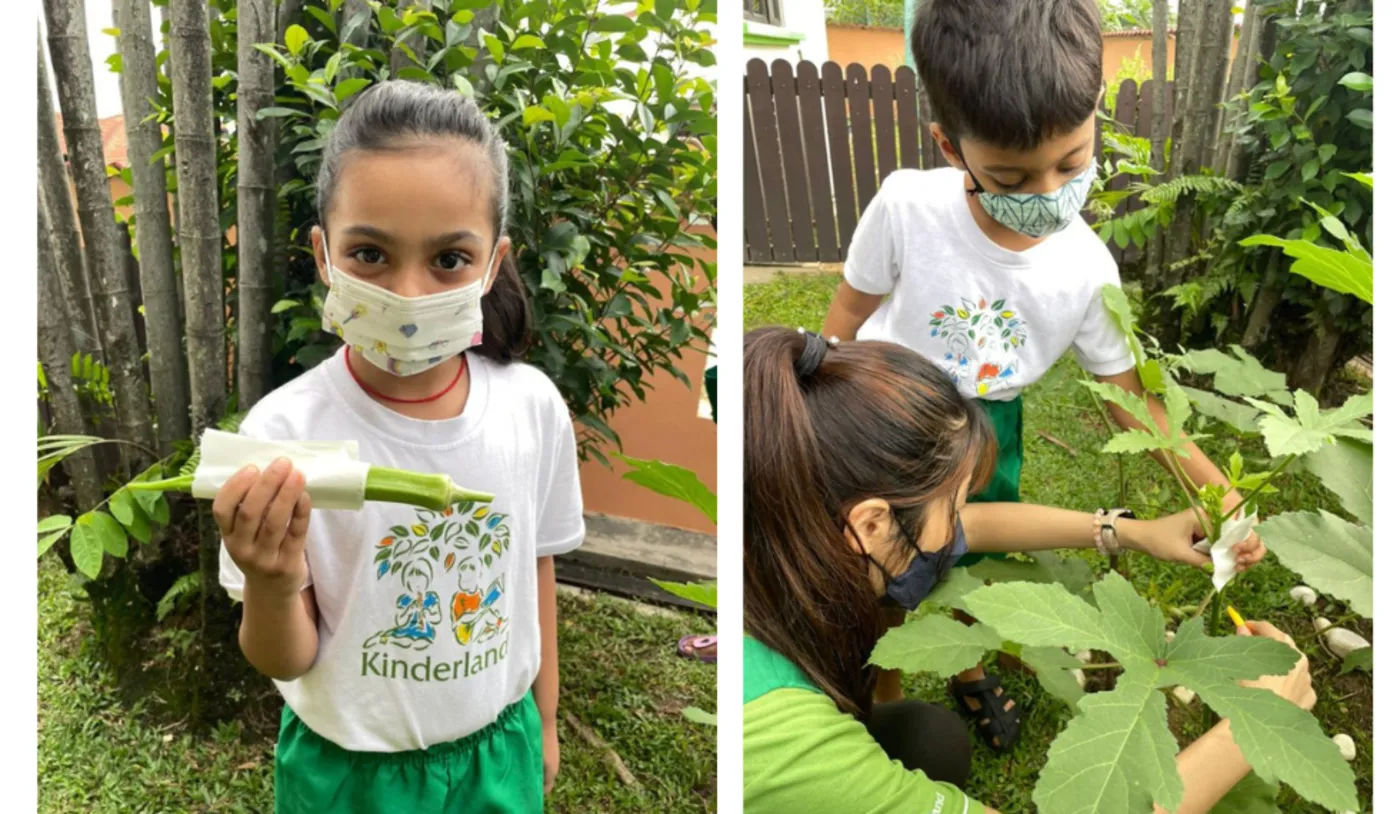
Vegetables are an excellent source of fibre and vitamin! At Kinderland Preschool @ Bangsar, the children had an exciting time harvesting the vegetables they planted themselves, turning healthy eating into a fun and rewarding experience.
We all want our children to be healthy, happy, and ready to learn. While food fuels physical growth, what your child eats also plays a powerful role in shaping their mood, emotional balance, and brain development. Think of food as brain fuel.
The right nutrients do more than help children grow taller or stronger—they support synaptic activity in the brain, improving learning, memory, focus, and mental alertness. Over time, consistent healthy eating habits can make a meaningful difference in your child’s emotional well-being.
The Brain Fuel Essentials
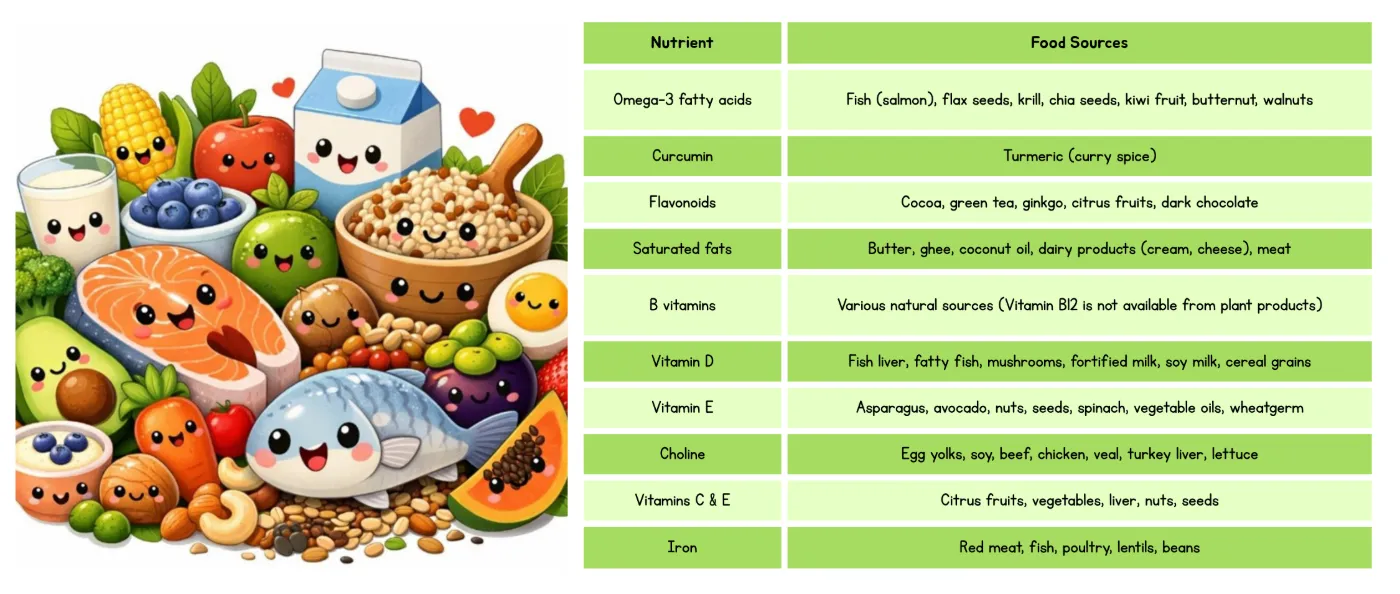
Did you know that key nutrients such as omega-3 fatty acids, curcumin, flavonoids, choline, iron, and vitamins B, D, and E help support memory, learning, and overall mental performance?
Foods rich in protein, fibre, and healthy fats fuel brain activity, promoting alertness and emotional regulation. Wholegrains, nuts, fish, and a colourful variety of fruits and vegetables provide these essential nutrients.
Among the most important brain-supporting nutrients are omega-3 fatty acids, particularly DHA, which is essential for brain growth and function. Because the body cannot produce DHA efficiently on its own, children must obtain it through their diet.
The guide below highlights key brain-boosting nutrients and the foods that nourish your child’s brain, supporting calmer, more balanced moods.
Steady Energy vs. the Sugar Rollercoaster
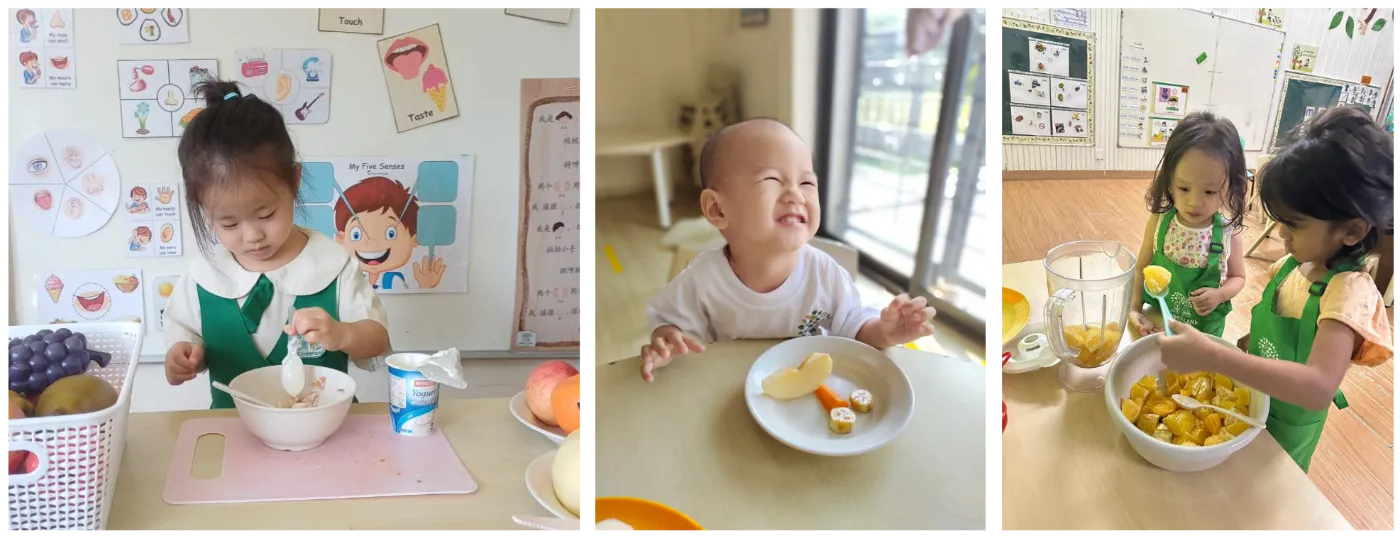
Allowing the children to be involved in food preparation will encourage them to enjoy nutritious foods. Seen here, Kinderland Preschool @ USJ (left) and PJ Section 14 (right), the children are making their own fruit salad, fruit & vegetable faces and fruit smoothie (respectively) all on their own.
Many parents notice how quickly a child’s mood can fluctuate after sugary treats or highly processed snacks. While these foods may provide a brief burst of energy, they are often followed by crashes, irritability, and difficulty in focusing.
For more balanced moods, aim for meals that include carbohydrates, protein, fibre, and healthy fats. This combination helps regulate blood sugar and appetite while supporting brain pathways linked to learning, memory, and emotional regulation.
Try these mood-boosting snack swaps:
- Fresh fruit over fruit gummies
- Air-popped popcorn instead of chips
- Cucumber slices with hummus for a crunchy, calming treat
Eat the Rainbow

Children from Kinderland Preschool @ Denai Alam and Kinderland Preschool @ Setia Impian eating “colours” right during their picnic session at their school.
Encouraging children to eat colourful fruits and vegetables daily ensures they receive diverse nutrients vital for mental health and physical well-being. Each colour provides unique benefits, supporting everything from immunity and energy levels to brain development and mood regulation.
If your child seems unusually fussy, irritable, or low on energy, take a moment to look at what is on their plate. Often, a low-sugar, nutrient-rich snack can give their growing brain the boost it needs to restore focus and brighten their day.

Healthy and nutritious food is important for physical growth and cognitive development as seen here by children of Kinderland Preschool @ Maisson Ara Damansara. Carrot-salmon-wolfberry- congee provides sufficient macronutrients for growing children.
At Kinderland, children’s wellness is a priority. Our meals are thoughtfully planned by a certified in-house nutritionist to support immunity, balanced nutrition, and overall well-being—so children are nourished to learn, play, and thrive.
This article is contributed by:
Department of Nutrition and Hygiene of Kinderland Singapore
References
Gómez-Pinilla, F. (2008). Brain foods: the effects of nutrients on brain function. Nature Reviews. Neuroscience, 9(7), 568–578.
https://doi.org/10.1038/nrn2421
Ploughman, M. (2008). Exercise is brain food: The effects of physical activity on cognitive function. Developmental Neurorehabilitation, 11(3), 236–240.
https://doi.org/10.1080/17518420801997007
Eat the rainbow to beat the blues. (2022).
www.healthhub.sg
https://www.healthhub.sg/live-healthy/eat-the-rainbow-to-beat-the-blues